 Quiet Lion
2026 · Organic search intent · SeaArt
SeaArt’s Organic Traffic Is Mostly Non-Brand—and Often Not “Create Art” Intent
When people size organic search for a top generative site, they often expect “brand + text-to-image.” Open SeaArt’s keyword mix and the picture changes.
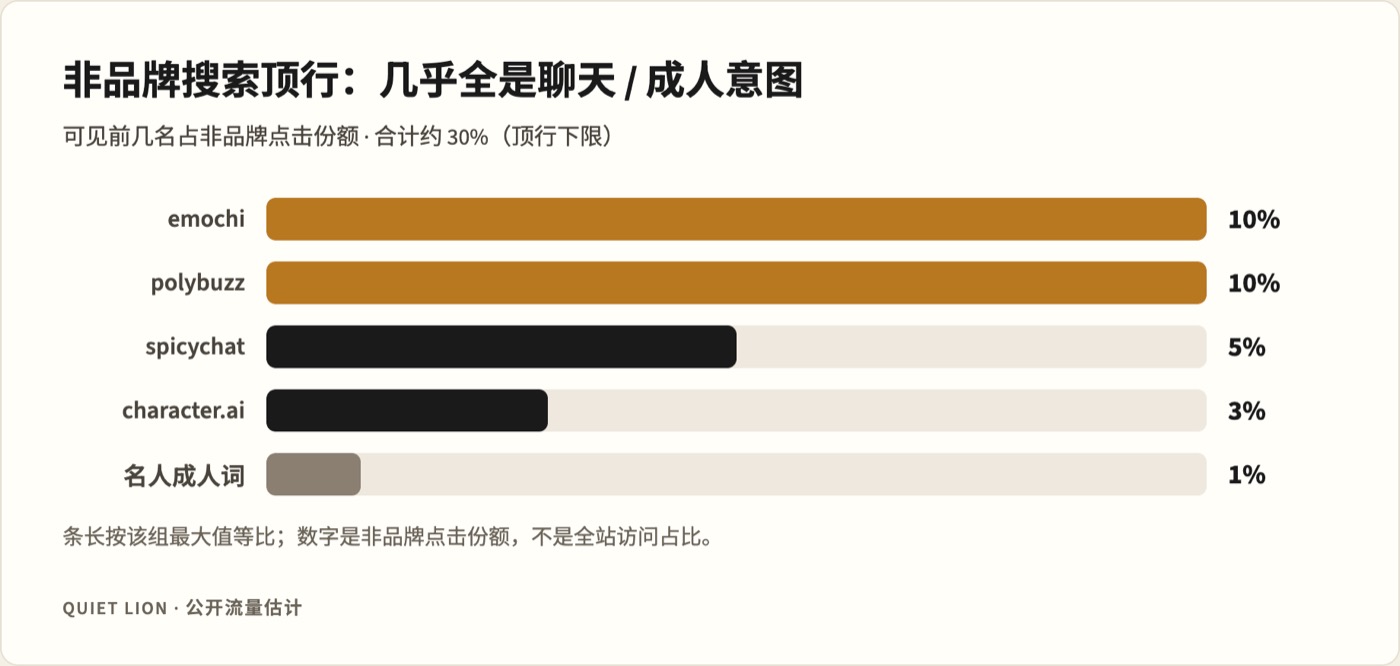
In Quiet Lion’s Apr–Sep 2026 window, organic is about one-fifth of whole-site visits. Inside organic, brand is roughly three-tenths and non-brand seven-tenths. Non-brand tops repeatedly show chat-rival names (public panels list terms such as emochi, polybuzz, spicychat, character ai) plus adult long-tails. The visible head can account for about three-tenths of non-brand clicks. That is an intent lesson, not a moral one: a large slice of arrivals pause on chat / edge use cases, not “I came to make a serious image.”
Do not blend markets: JP localized home vs US rival bridges
Japan: a localized home can capture a large share of search. United States: rival-named feature pages can ramp fast—and raise brand and creative risk. Paid search more often hits create desks; organic more often rides chat rivals and adult long-tails. Budget and compliance should not share one bucket.
How operators should use this
Do not translate “organic is up” into “brand mindshare is up.” Ask non-brand share, whether the head is rival interception, and whether landings are home or feature bridges. Consumer brand queries can show million-scale volume; those searchers want the product. This title targets analysis queries—“non-brand intent,” “bridge pages”—smaller volume, better fit.
Full keyword and landing tables are in the PDF. Related: Direct habit mix, Discord → Direct accounting.
Remaining chapters
Full text in PDF · 990 credits
The page keeps a three-chapter teaser and outline. Redeem to download the PDF — we do not expand the full article on-page.
- Brand vs non-brand cut
- Head terms vs landings
- JP / US differences
- Paid create desks vs organic chat long-tails
- Compliance and budget split