
SeaArt case · Apr–Sep 2026 · limited offer 990 credits
SeaArt traffic and acquisition structure · Apr–Sep 2026
When taking AIGC products global, a common question is whether traffic comes from bought search or open habit. SeaArt is a Chengdu-built consumer generative site—image, video, character chat, and a model library in one place. Quiet Lion uses Apr–Sep 2026 public traffic estimates to map acquisition: Direct as the core, competitor search bridges, and how Discord lifts unattributed return into Direct. This page is a teaser with redacted previews; full tables live in the PDF.
01What this report answers
Window: Apr–Sep 2026, global, public traffic-panel estimates (not revenue, not first-party analytics). For operators, product, paid, and community teams, it answers four search intents:
- Where does SeaArt traffic come from? Roles of Direct, organic, and paid search.
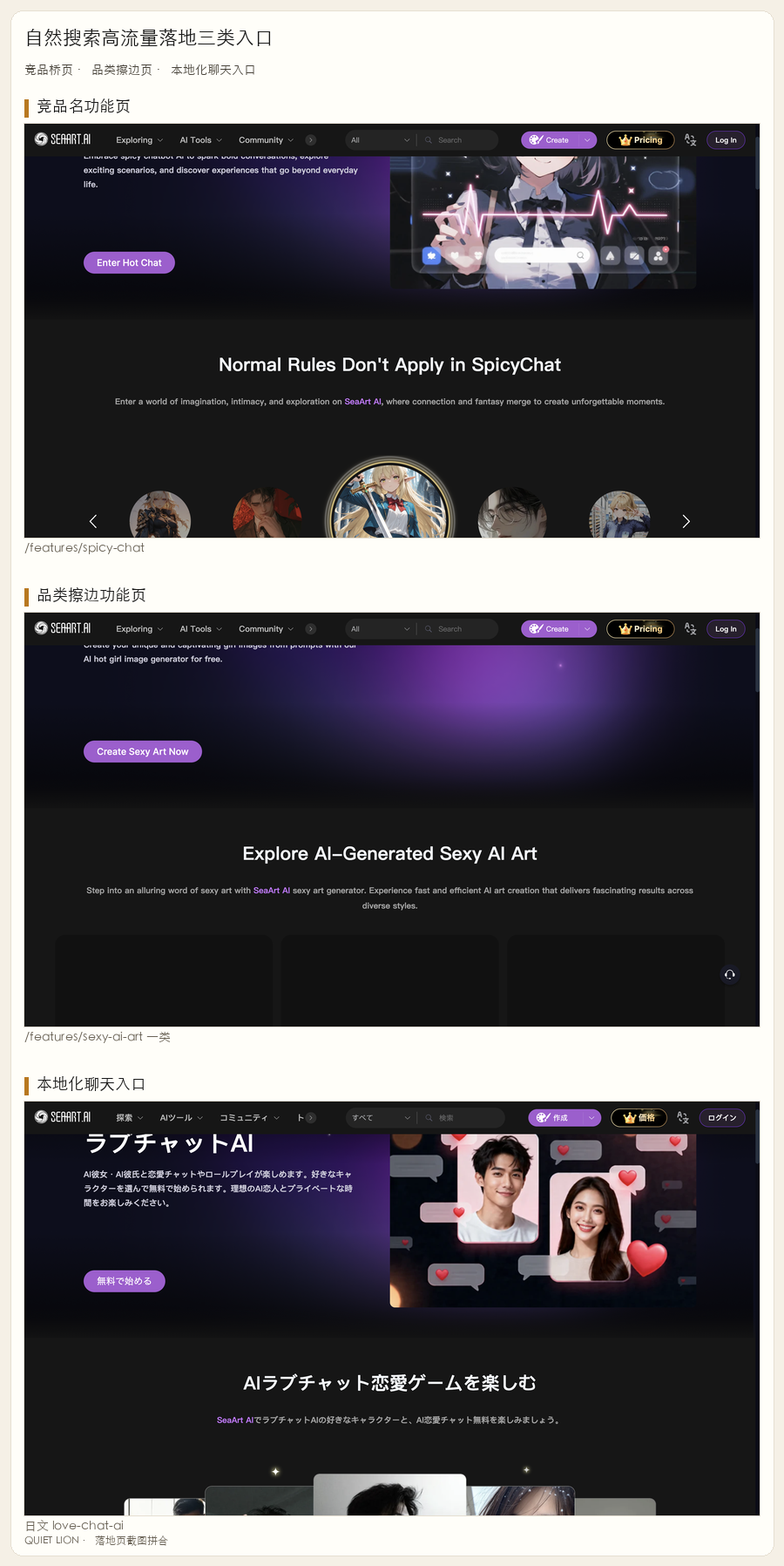
- What does organic search sell? JP localized entry, US competitor feature bridges, chat and adult-leaning long-tail.
- Does Discord count as acquisition? How a ~100k-scale official server lifts unattributed clicks into Direct.
- Do strong visits mean dense monetization? Separating size, sessions, and reputation risks.
Keywords and landings explain acquisition structure—not a compliance audit of generated content.
02Conclusions first—for AIGC teams going global
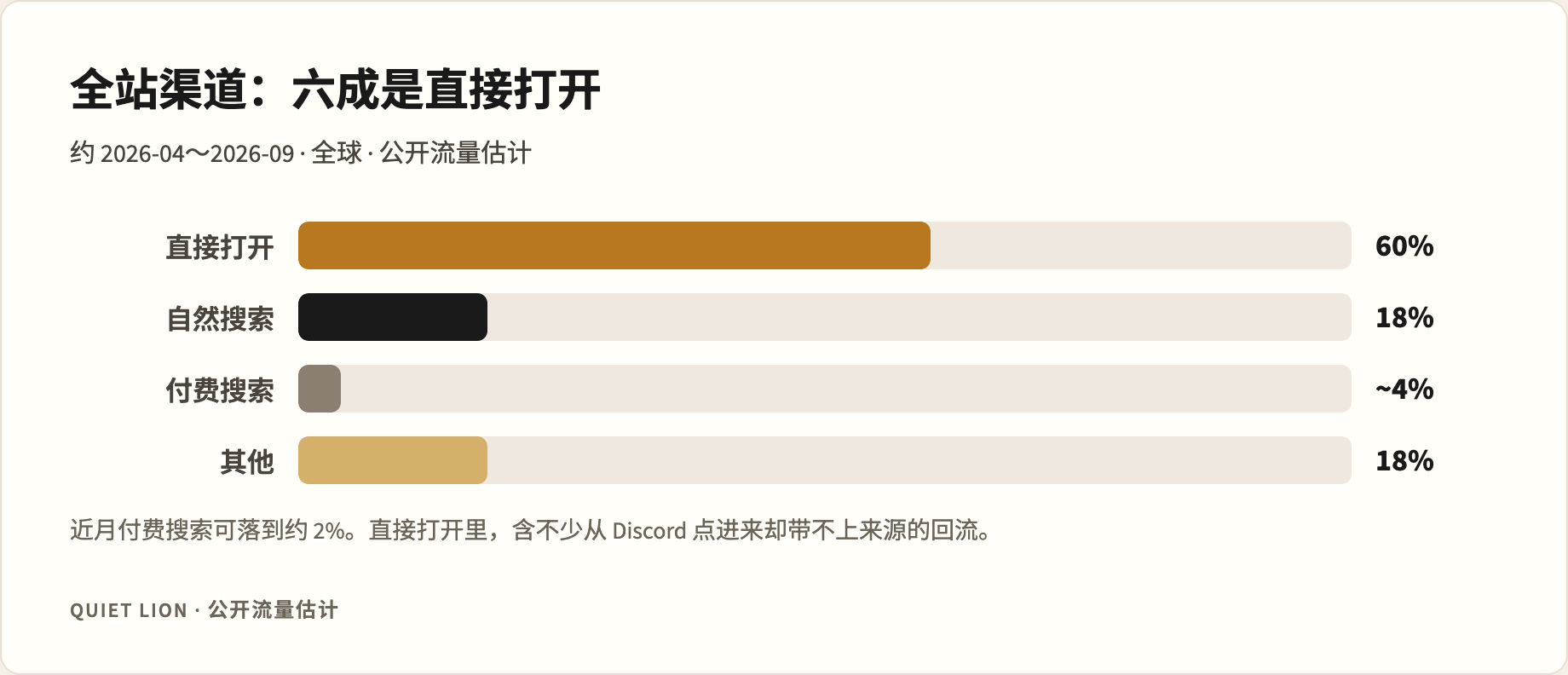
- Growth looks like open habit, not bought-search stacking. Rough six-month mix: Direct ~60%, organic ~20%; paid search as a share of all visits can sit in single digits—about 2% recently.
- Daily stamina / credits are a habit loop, not a tech metric. When the quota runs out you wait or pay—whether people keep burning after arrival tracks paid conversion.
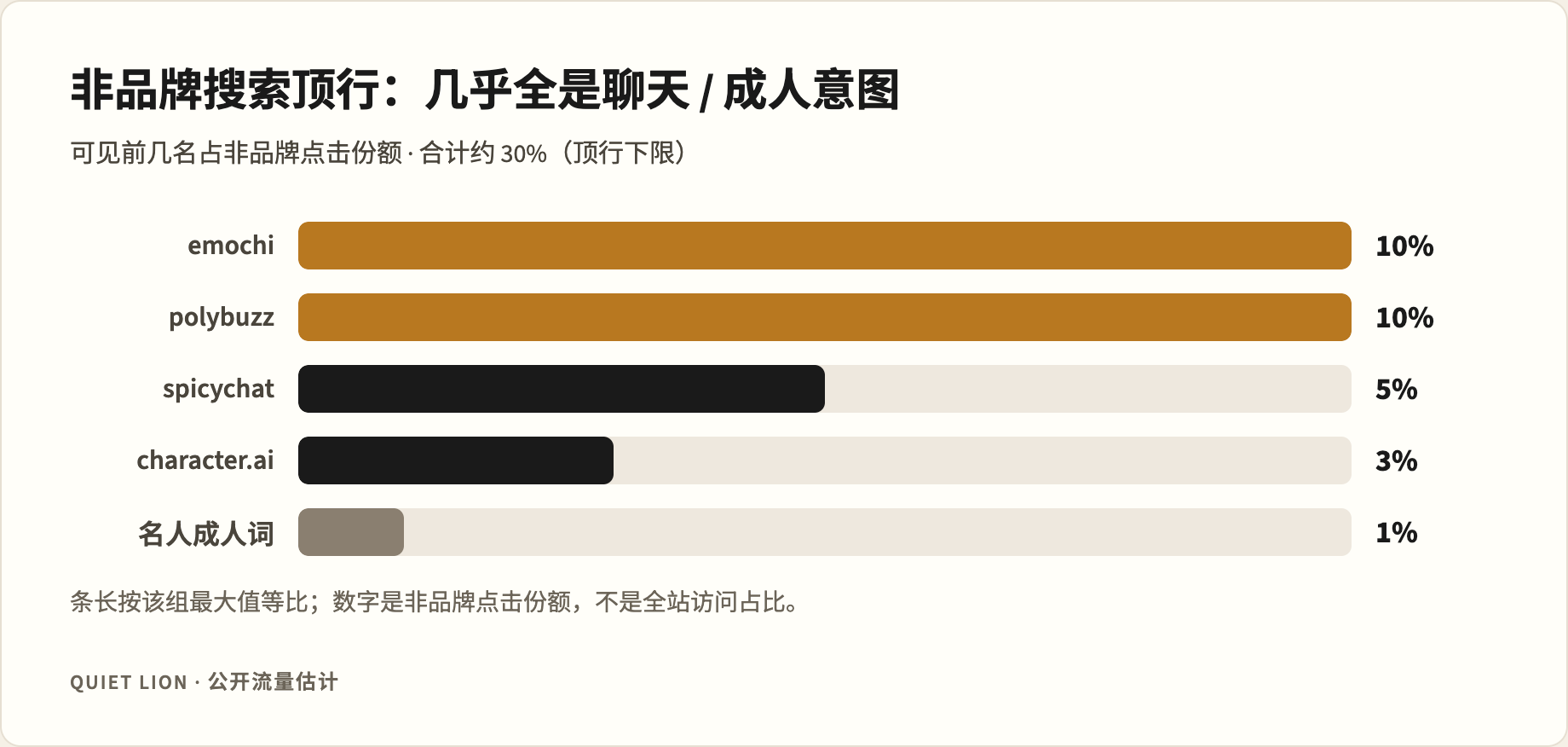
- Organic often eats competitor chat terms and edge long-tail. People arrive on the query; whether the site generates is the next gate. Japan leans localized homepage entry; the US more often uses competitor-named feature bridges.
- Discord is more ops back-office, and it also lifts “source-less” Direct. Check-in, credit redeem, and appeal tickets are busy; clicks from the server into the site often carry no referrer.
- Strong visits ≠ dense monetization or clean reputation. Peer size and session depth look strong, but paid density and cancel/refund complaints must be read separately—figures and tables are in the PDF.
03What the traffic map includes
The full PDF follows this path (directory preview only on this page):
- Size and peer comparison (PixAI / Dreamina / Civitai / Tensor and peers)
- Channels: open habit vs paid; countries and devices
- Search landings: localized entry, competitor bridges, chat long-tail; JP/US gray-intent frame
- After entry: search gates, FAQ appeal wording, community side-path risk imagination (not a proven claim)
- Monetization and reputation: visits ≠ revenue; press claims vs review-site voices
04Redacted preview
Structure only below. Exact shares, full peer tables, and landing readings unlock in the PDF.
| Peer field | SeaArt | Peers |
|---|---|---|
| Six-month visit scale | 100M-class head | |
| Session depth | ~10-minute class | |
| Device skew | Mobile-web heavy | |
| Sep visits / bounce etc. |
Full peer numeric table (PixAI, Dreamina, Civitai, Tensor) is in the PDF.
05FAQ
Does ~60% Direct mean brand memory is locked?
Not entirely. The bucket mixes daily returners and community-sent visits (e.g. Discord) that often arrive without a referrer. A small Discord slice on a social panel can coexist with a large server and real return.
Edge terms in organic—does that mean the site sells NSFW?
Who search brings in and whether generation is allowed on-site can be different paths. This page only frames it; gates, FAQ appeals, and community side-path risk are separated in the PDF—and the side-path note is industry-analogy risk imagination, not a proven official practice.
Is SeaArt “head of set” vs peers?
In this public-estimate window, size and session depth look near the front of the peer set, with a mobile skew. Full numeric tables stay in the PDF so the unpaid page does not dump everything.
Why only 990 credits?
This report is a limited-offer trial price (default industry monthlies are often 2990). The redeem UI controls; the offer may change later.
What else is in the PDF?
Full channel breakouts, peer tables, search landing and keyword detail, Discord and monetization/reputation crosses, and a read-frame for teams going global. This page does not repeat the full longform.
Limited offer · 990 credits
Full case PDF
990 credits redeem this PDF
Includes channel breakouts, peer tables, search landings and keyword clusters, community and monetization crosses. This page is teaser and redacted preview only.
中文