
YouTube Download · Sep 2026 · limited offer 990 credits
YouTube Download web tools Top 30 · September 2026
A category cut for AI investors and SaaS / AIGC product & ops readers. YouTube-download search is still large; the harder questions are who captures clicks, whole-site size and domain age, whether free+ads still dominate, and how homogeneous features are. Quiet Lion ranks web tools Top 30 by September 2026 clicks on three seed queries, then crosses visits, domain age, monetization, and public feature signals. Readable article below; dual boards and tables unlock in the PDF.
01What this report answers
Window: September 2026. This page states the judgment in prose; the PDF opens the same sample’s full tables: search-click board, whole-site visits board, monetization, feature matrix, and intent boards.
- Who captures download-query clicks? Web-tool Top 30 (search-click board).
- Who has the larger whole-site footprint? Same pool re-ranked by Sep visits.
- How do models distribute? Free+ads / freemium-tint / subscription-led (public-page signals).
- How overlapping are features? Video, audio, Shorts, cross-platform, convert, transcript matrix, plus top-five by intent.
Search capture and public-page signals only—not revenue. Ad/payment discussion on this page is editorial judgment and is not a separate PDF chapter.
02Conclusions first—before you build
Demand is large; mainstream monetization is not easy. Search heat is real. The Top 30’s own public monetization mix already converges on free+ads.
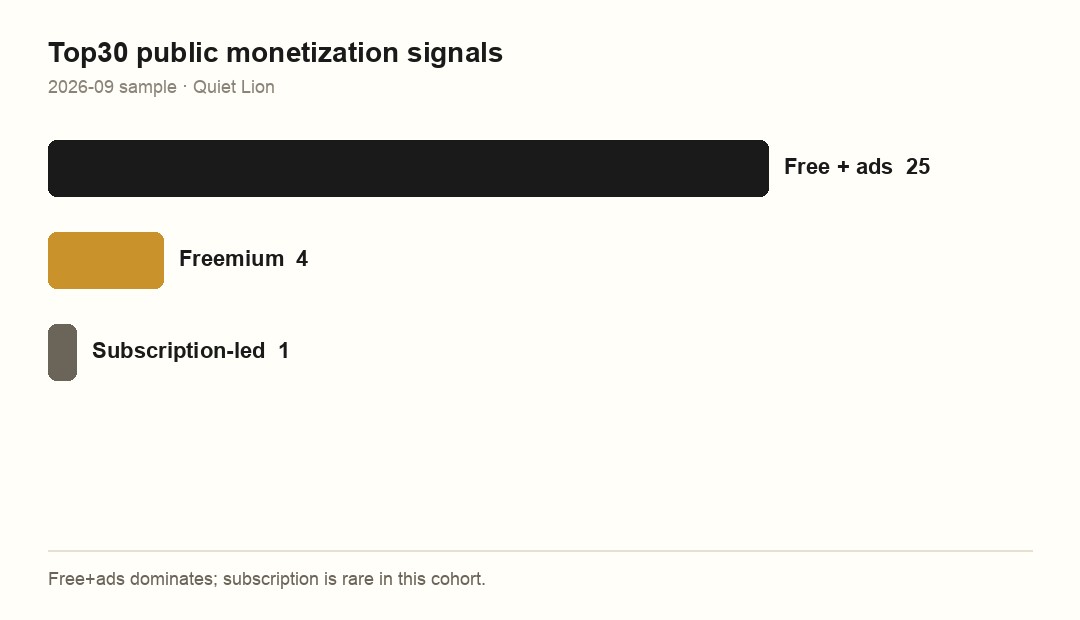
The thirty sites look highly isomorphic: free+ads ~25, freemium-tint ~4, subscription-led ~1; nine of the Top 10 are free+ads. Domains registered in 2023+ (~20 sites) take ~60% of this Top 30 click pool—new domains can still climb; competition looks like homogeneous features plus domain rotation.
User intent is not a single download. The same cohort also carries MP3, Shorts, resolution, transcripts, and cross-platform asks. Feature matrix and intent top-fives are in the PDF.
If you only need short-term visits, these queries still explain where traffic comes from. If you need narratable subscription revenue or scalable paid ads, expectations should come down—the Top 30 already converges on free+ads.
PDF includes: search-click board, whole-site visits board, monetization, feature matrix, and intent boards.
03What users are actually searching
Three seed queries feed the pool: youtube downloader, youtube to mp4, download youtube video. On the Top 30, clicks still lean two ways: find-a-tool and name-a-format.
Nav and copy run wider than the seeds. Public-page signals across 30 sites this round: video MP4 ~28, audio MP3 ~23, 1080 ~23, mobile mention ~23, convert ~20, 4K ~20, Shorts ~17, no-signup claim ~17. Cross-platform mentions to TikTok / Instagram / Facebook land around a dozen sites. Transcripts ~9; clear extension pushes ~4; creator-research signals ~3.
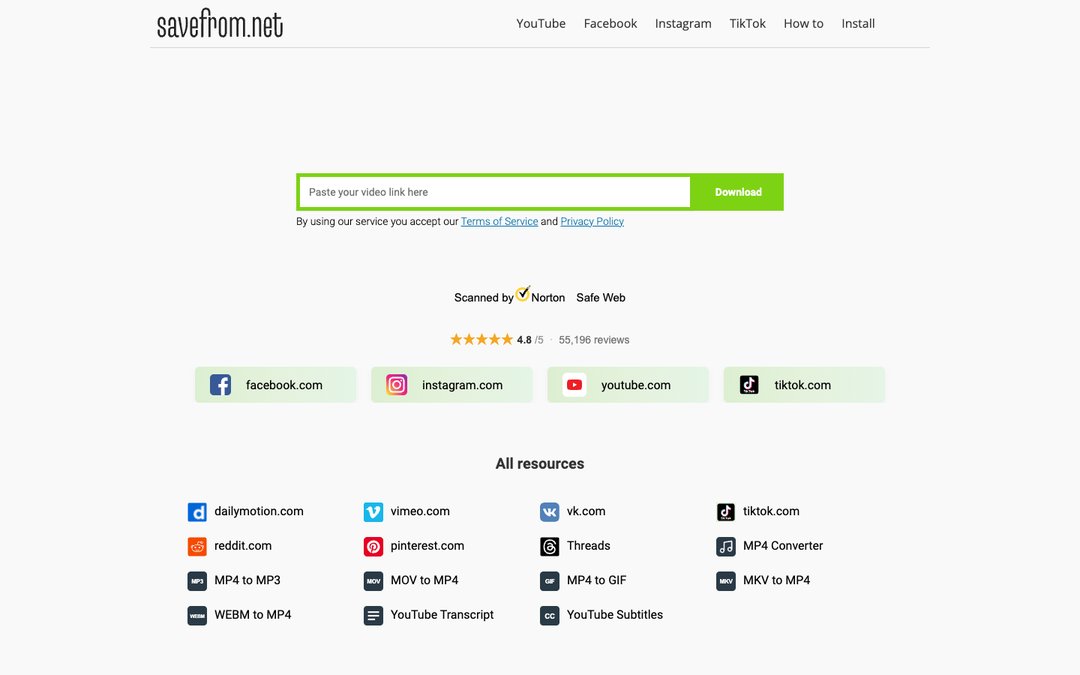
Scenes diverge: offline lessons, edit ingest, audio-only, Shorts clips, archive quality, text for notes. You think you are building one download query; you absorb a split demand cluster. The PDF’s intent boards help map which landing shape you would actually build.
04Why mainstream monetization stays hard
Hot search is not a working acquisition and monetization path. The PDF does not include ad-platform or payment-policy excerpt pages; the notes below are editorial judgment on this page—to explain why the Top 30 converges on free+ads. Site-level labels remain in the PDF monetization chapter.
Paid ads rarely scale as acquisition. Mainstream search and social ads stay strict on unauthorized download and DRM-bypass landings. Treating a YouTube downloader as a paid landing page rarely works as normal acquisition.
Publisher ads are also hard. These pages rarely sit stably inside mainstream ad networks; public discussion often points to more aggressive display formats that trade UX for revenue.
Subscription rarely becomes the main story. When payment review treats copyright-adjacent flows as high risk, public pages converge on free core + ads—matching the PDF’s 25 / 4 / 1 mix.
Rechecks also show survival risk: timeouts, expired domains on registrar landings, or security walls. Search clicks can persist while the product page is no longer verifiable—called out in the PDF positioning column.
If you care more about who already routes paying intent to checkout, that is a different report (not a chapter of this PDF): Stripe AIGC pay-path · Sep 2026.
PDF includes: search-click board, whole-site visits board, monetization, feature matrix, and intent boards.
05What the Top 30 confirms
The thirty sites’ own public signals point the same way—the PDF spreads that judgment across two boards, a monetization table, and a feature matrix.
Free+ads dominate; subscription is rarely the main story. Domains registered in 2023+ take ~60% of this sample’s search clicks; 2025–2026 domains can still climb. Planning only “a better download page” underestimates homogeneous features plus domain rotation.
Search clicks and whole-site visits are different metrics, so the PDF splits a search-click board from a whole-site visits board. Rankings need not match. Neither is revenue.
Feature promises overlap heavily. Differentiation sits more in domain position and keyword layout. With free+ads as the main model: search absorbs same-shaped demand, ads monetize, new domains absorb instability.
06If early resources would go here
For short-term visits, these queries still explain inflow. If you also need scalable paid ads, narratable publisher revenue, and subscription as a durable core, expectations should come down: “search demand” and “sustainable monetization” are often not the same bet.
A safer use is to treat YouTube download as an observation sample—what markets look like when huge search demand meets copyright-sensitive ads, publishers, and payments—not as your first scalable commercial story by default.
Based on public search, public pages, and public policy directions. This does not encourage unauthorized downloads or audit evasion. Enforcement varies by account and landing; none of this is legal advice.
07Full report preview · redeem with credits
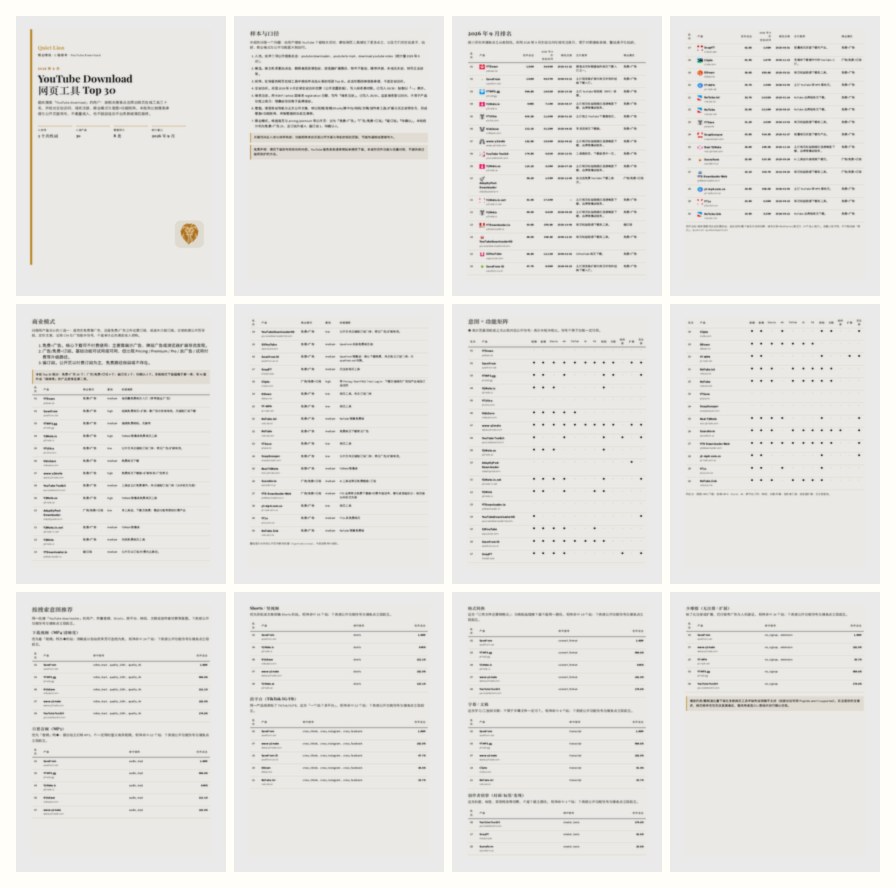
Judgment above. The 12-page PDF matches the mosaic below: method, search-click board, whole-site visits board, monetization, feature matrix, intent boards. No dedicated ad/payment-policy excerpt chapter.
| Field | Scale / structure | Detail |
|---|---|---|
| Seed queries | 3 English download-related queries | |
| Web tools listed | 30 | |
| Free+ads / freemium / subscription | 25 / 4 / 1 | |
| Dual boards | Search-click · whole-site re-rank | |
| Intent slices | 7 (less-friction removed) |
Exact ranks, domains, clicks, Sep visits, and ●/· cells are only in the PDF.
08FAQ
Do high search clicks mean a good business?
No. Click share is search capture; whole-site visits and monetization are separate. The PDF splits the first two into dual boards.
This page mentions ads and payments—are policy excerpts in the PDF?
No. That is editorial judgment on this page. The PDF gives site-level monetization and feature tables, not a policy-excerpt chapter.
How does this relate to the Stripe pay-path report?
This report is download-query capture and monetization shape; the Stripe report asks whether AIGC sites already route paying intent to checkout.
Why only 990 credits?
This report is a limited-offer trial price (default industry monthlies are often 2990). The redeem UI controls.
What is actually in the PDF?
Method, search-click board, whole-site visits board, monetization, feature matrix, and intent boards. This page does not repeat the full tables.
Limited offer · 990 credits
Full Top 30 PDF
990 credits redeem this PDF
Includes dual boards, monetization, feature matrix, and intent boards. This page is the article plus a 12-page mosaic preview.
中文